Public nudity in Germany.

Okay so as per the title suggests, there’s something you’re going to have to mentally prepare yourself for when you visit Deutschland….

Germany has something called Freikörperkultur (FKK), meaning a free body culture which is particularly noticeable in the summer time!

accessed from
https://www.vice.com/en_us/article/9bkjnd/naked-people-park-berlin-876

It is totally normal to go naked at pools, lakes and saunas in Germany, in fact Saunas often have strict no-clothing policies!

This concept can be understood by considering the history of nudity in Germany, as the first official FKK club was founded in Essen in 1898.

Nazis put a stop to nudist practices but eventually began to relax nudity bans, first in rural areas.

After the war, the German Association for Free Body Culture (DFK) was established, and the acceptance of nudity was at an all time high. Nudity was rapidly becoming a social norm, as well as a prominent aspect of German culture.

Clearly, nudity at this level is far less accepted as a social or cultural norm in a country like Australia, and at first may take some getting used to.

The attitude Germans have to nudity is wonderful, and has helped form the culture of body positivity so prominent in Germany.
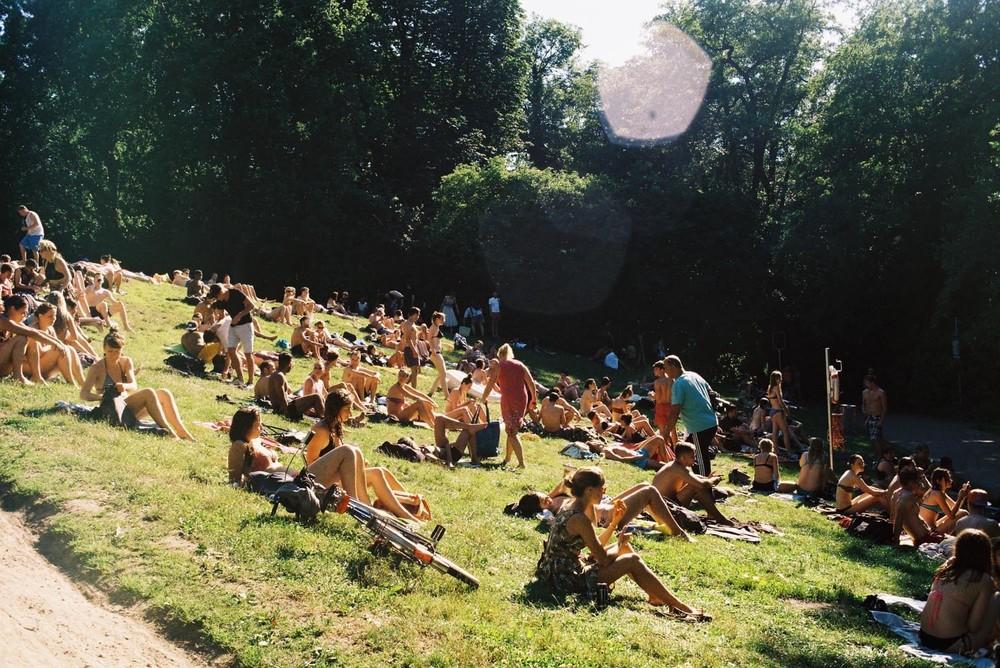
accessed from
https://www.vice.com/en_us/article/9bkjnd/naked-people-park-berlin-876

Societal pressures about body standards and beauty ideals don’t seem to impact Germans so much, whom appreciate bodies of all shapes and sizes, and don’t criticise bodies that don’t conform to societal standards.

I personally believe that the free body culture is a wonderful thing that encourages self-love and an appreciation for a diversity of bodies!

German Street Art- “The Kiss”, East Side Gallery, Berlin.

East Side Gallery, Berlin, Germany. Accessed from: https://backpackingman.com/berlin-wall-east-side-gallery-street-art/

The Kiss” is a famous painting on Berlin East Side Gallery. The East Side Gallery is an open-air art gallery on the longest remaining stretch of the Berlin Wall– a concrete barrier installed by the German Democratic Republic of East Germany that divided East and West Berlin from 1961 to 1989. The wall stole the freedom of Berliners and prohibited them from crossing. At least 171 people who attempted to cross over were killed.

Depicted in the painting is Soviet leader Leonid Brezhnev and the East Germany President Erich Honecker kissing- seemingly quite passionately. The image is based on a real photograph taken in 1979 at an event honouring of the 30th anniversary of the German Democratic Republic of East Germany.

‘The Socialist Fraternal Kiss’, 1979. Accessed from: https://rarehistoricalphotos.com/socialist-fraternal-kiss-leonid-brezhnev-erich-honecker-1979/

The type of kiss is known as a ‘socialist fraternal kiss’ and is a recognised form of greeting among statesmen of Communist countries; an act that expresses the special connection that exists between Socialist states.

Artist Dmitri Vrubel painted the iconic work when the Berlin Wall came down in 1989. In 1990, when erosion required the wall to be renovated, Vrubel was required to redo the painting.

The historical significance of the works’ imagery, as well as the significance of painting on the Berlin Wall itself means the piece is of great cultural significance to Berliner’s.

The piece is perhaps the most famous work featured at the East Side Gallery, with people coming from all over to snap a photo posing (or kissing someone!) in front of it.